Glimpses of a Homegrown Revolutionary
A straightforwardness is a positive visual picture engraved on plastic or glass, through which light is projected onto a wall or screen, emphatically broadening its review surface.
The event for this appreciation is the new declaration by his better half, the craftsman and custodian Alessandra Moctezuma and later by Mike himself in interviews, that he has suspended therapy for disease and is in palliative consideration. He said that he will profit himself of California's End of Life Option Act and is spending his days at home "encompassed by adoration and unbelievably spoiled."
Mike Davis and his significant other Alessandra Moctezuma at their San Diego home on July 6, 2022. Photograph by Jason Sexton.
His work on Los Angeles is positively his generally famous, yet trapped in a reductionist twofold among hopefulness and negativity that tracks with the city's own developed subject of "daylight and noir" (to utilize Mike's own development from City of Quartz). However, his LA. oeuvre — bookended by 1990's City of Quartz and last year's Set the Night on Fire: L.A. in the Sixties, with 20 genuine titles in general — is a comprehensive, persuasive review. The sponsor picture of L.A. as a WASP-y "white spot," racially unadulterated and washed in a Mediterranean gleam, was supported, oddly, by its insight of the prophetically catastrophic fiascos both regular and synthetic — seismically, climatologically, on its fierce roads and illustratively in its writing, film and visual craftsmanship. ("The Literary Destruction of Los Angeles," a part in 1998's Ecology of Fear, is an authoritative composition on the city's fixation on its own end.) The geology is even more paradisiacal for being on close conditions with damnation.
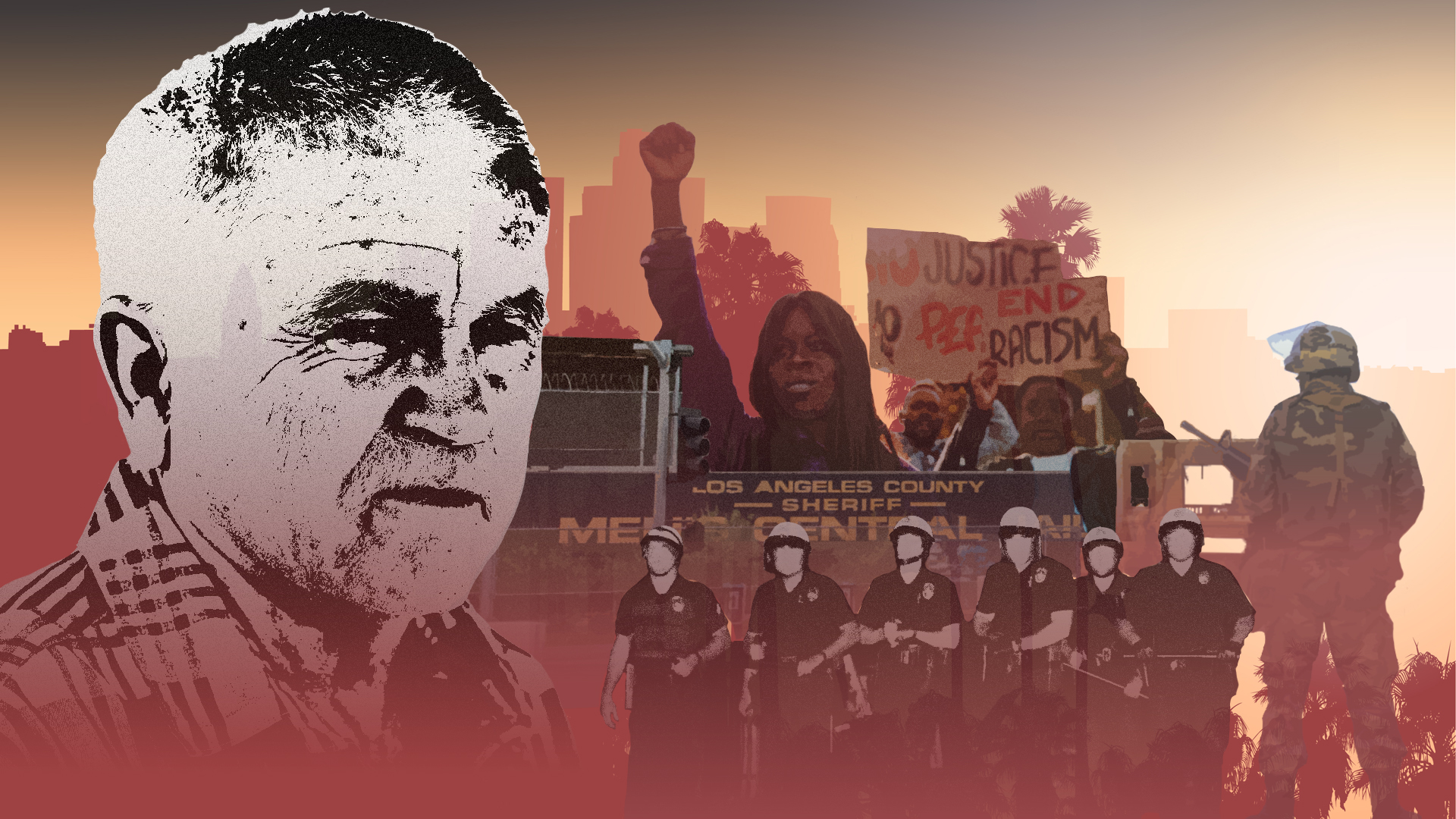
The Long Beach, Sylmar and Northridge tremors, the destructive surges of the mid twentieth 100 years and the gigantic out of control fires of the mid 21st have taken many lives and are among the costliest calamities in U.S. history. The social geology delivers its own calamities, a ceaseless chain of brutal experiences between networks of opposition (Black, Mexican, Asian, working poor, strange) and the scandalous authority of the state of affairs, the Los Angeles Police Department, which, regardless of the number of blue-strip commissions and change endeavors that are tossed at it, can be counted upon to reenact its job as traditionalist hooligan crew.
From free discourse riots in the old Plaza of the mid twentieth hundred years to the wartime Zoot Suit Riots, from the Watts and Rodney King uprisings to many more modest conflicts (like the May Day rallies of 2007 in MacArthur Park, when LAPD cruiser cops slammed activists, or the police revolt against Vietnam War nonconformists when LBJ gave a discourse in Century City in 1967), the roads of L.A. have long introduced a horrendous, yet in addition motivating, scene. Pundits of Davisian end of the world double-cross their own fixation on the clouded side and powerlessness to opposition read argumentatively: There would be no restraint without colossal.
At the center of Mike's work is the way he esteems the pride of everyday routine itself — experienced as fair, sound, economical. Also, not simply human existence. He recognizes class battle as the essential motor of current mankind's set of experiences, and he is additionally a hippie since entrepreneur double-dealing abuses the groups of laborers as well as the actual Earth. On the off chance that Mike's is as yet a human-focused morals, he was, in the last part of the 1990s, when he embraced his biological turn with the distribution of Ecology of Fear, among the forlorn voices to connect the then-huge hole between natural cognizance and civil rights. It was only after well into the new thousand years that the hole restricted essentially, as proof developed that environmental change was moving toward a basic limit and that inside its line of sight were 1,000,000 species, however the world's immense and duplicating armies of poor people, packed in megacities in the two sides of the equator. Tropical storm Katrina, which Mike anticipated (similarly as he cautioned of the 1992 L.A. uprising, and of the pandemic we're still amidst), was an early indication of what the new environment system is starting to release — a progression of catastrophes that will prompt passing and relinquishment for poor people, even as it opens up frightful new improvement potential open doors for the rich.
His extreme incorporation of the social and innate sciences, fording the unnatural boundaries between them, moves toward a Borgesian, Aleph-like trepidation of reality. In this vision, the transient blaze of a defiance in the city of L.A. tracks down its place close by advancement, environment and topography.
Everything works to a reverberation that is more noteworthy than the amount of its constituent parts: as far as I might be concerned, in any event, a profound reverberation.
There, I said it. Here is the otherworldly work of Mike Davis.
SLIDE #1
(ca. 1988)
Mike holds court in the corridor outside the smoke-gagged newsroom of the confined, shabby L.A. Week after week workplaces in pre-improved, still-strange Silver Lake. He is wearing his brand name bowl hair style and an elfin smile, the sort that accompanies the kicker to an interesting not entertaining story from the forefronts of the great battle. City of Quartz is as yet two or three years away, yet in his mid 40s he as of now has the atmosphere of revolutionary legend about him.
We realize you were brought into the world in Fontana, that you were in CORE and SDS, are more astute than everybody in the structure, and that you were the one to assist us with perusing the tumultuous second. It is difficult to convey the feeling of emergency in the late Reagan years without appearing to exaggerate it, considering what we face today. In any case, we confronted nukes, AIDS, homophobia blasting from the White House, lethal American strategy in Central America, a vagrancy emergency as basic as the present and a liberal request in City Hall that scarcely offered a fig leaf to a savage LAPD.
We believed: If Mike's gotten back to L.A. after stretches in London, Belfast and other extremist problem areas, quite possibly we'd have a ringside seat to our own upheaval.
Two or after three years, we dealt with a significant task together about the job of the Catholic Church in the city. You spread out the dim history — the traditionalist rule of Cardinal James Francis McIntyre through the insubordinate 1960s. In any case, you haven't portrayed Christianity just as a considerable piece of the Establishment. Set the Night on Fire, you and co-creator Jon Wiener's rambling record of revolutionary activism in 1960s L.A., remembers a part for Sister Corita Kent of the Sisters of the Immaculate Heart of Mary, who acquired notoriety as a silk-screen craftsman. Her serigraphs, delivered in pop workmanship style, energetically passed on messages against the Vietnam War and for social equality, and they obviously typified the soul of the as of late finished up Second Vatican Council gathered by Pope John XXIII: a Gospel grounded in the battles of normal individuals, particularly those trapped in the pot of social treachery. In Set the Night on Fire, a Catholic religious recluse (who was eventually compelled to revoke promises by McIntyre) has her spot in the pantheon of progressive legends close by Communist Party pioneer Dorothy Healey, Los Angeles Free Press manager Art Kunkin and the understudy heads of the Chicano Blowouts.
The majority of my liberal companions made the indication of the cross at whatever resembled religion — particularly Christianity. Yet, you were right there, self-declared Marxist, composing an exposition in Grand Street with extraordinary verve about the Azusa Street Revival in mid 1900s L.A., where the soul plunged in "tongues of fire" on a multiracial team of misfits — the establishing snapshot of Pentecostalism, seemingly the main strict development of the twentieth hundred years (which, obviously, has taken a long, rightward turn since Azusa Street's liberatory populism).
You were raised by an Irish Catholic mother who removed Republican from a sort of class cognizance (detesting the Kennedys as "ribbon drape" Catholics). Your dad was a savage exchange unionist with moderate perspectives on race. Some place along the line you got thoughts from Jewish apocalypticists, the Old Testament-time prophets who were the heralds of Jesus and his adherents — the civil rights fighters of their day. You made the association unequivocally in a meeting:
"I have had a long lasting interest with the profound foundations of religion in the otherworldly and creative work of poor people. The end times … is the disclosure of the mysterious history of the world, of the puzzling pathways of fiendishness. It lays out the story of the slave, the crushed Native American and the unfortunate worker as the reality of history."
You write in the voice of the prophets.
SLIDE #2
(1990)
Mike drives a British narrative film team on a visit through L.A. roads that demonstrate City of Quartz's proposition — the carceral brutalism of the Men's Central Jail, the fuming roads of South Central. Next stop: Tommy's Hamburgers, the "first, widely popular" stand in the Rampart District. The scene, in the shadow of Downtown's glass and steel power structures, is rowdy, ordinary neighborhood tone: a major, brown, neon-haloed late night swarm spilling off the walkway into the road. Kid Frost raps from uber speakers on a vehicle sound system. A lowrider skips just in case.
Mike radiates.
I can hear his voice so obviously:
"Folks, this is simply astonishing. So presently you can see who truly possesses the roads of L.A. — and it's not the LAPD."
Mike Davis at home in Pasadena, 1998. Photograph by Anne Fishbein.
It is difficult to exaggerate City of Quartz's nearby result, how it united the supposed Los Angeles School, took care of by scholarly energy from researchers in urbanism and geology. The book's impact spilled past the ivory tower, energizing L.A's. left and embarrassing the promoters, who mounted a very long term attack drove by, among others, the very Los Angeles Times that has distributed no less than three tributes to Mike since the declaration that he's suspended malignant growth
Comments
Post a Comment